
Category: Task Management

  • Here’s an Easy and Efficient Way to Manage Projects and Daily Tasks

    Here’s an Easy and Efficient Way to Manage Projects and Daily Tasks

    Asana Boards for Project Managment and Daily Tasks

    Are you a visual thinker? Are you someone who likes to keep your calendar in front of you and your daily tasks on post-its around your desk?

    Digital task managers are much more efficient than paper for daily tasks.

    • You can have your to-do list with you on your mobile device and check off your tasks throughout the day.
    • You can assign tasks to others.
    • You can create calendar reminders.
    • You can prioritize daily tasks.

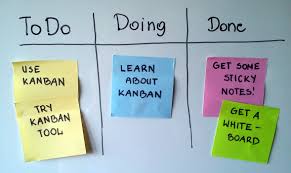
    Many organizations use “Kanban” boards for visual process management.

    These boards have cards, post-its, or other markers representing work items. They have columns for process steps. You can read more here: How to Use a Visual Task Management System.

    Trello is one of the most popular tools utilizing a kind of Kanban method. Another popular tool, Asana, has recently added the ability to create boards as well.

    Asana is a bit more complex to learn and use than Trello, but it’s more feature-rich.

    Asana is a unique combination of project management and collaboration tasks. You can create, categorize, and schedule projects in a special calendar. You can add custom fields and track only what is important to you.

    For task management, you can:

    • Create recurring tasks
    • Assign tasks to projects
    • Prioritize daily tasks
    • Easily navigate between views for projects and your specific tasks

    Asana is very popular with teams. Asana provides visuals of completed and remaining tasks in a dashboard that makes it easy for the project owner to track progress. The project owner can add descriptions and status updates, providing a quick snapshot on how the project is moving along.

    Team members can discuss the project’s progress while it is happening, share it, comment on it, upload a file, or simply let everybody know that they like the change. All relevant conversations are saved on Team Pages.

    You can have up to 15 team members with an Asana account on the free plan. The Premium plan will give you more advanced team and project management features as well as priority support.

     
    SUBSCRIBE TO MY NEWSLETTER

    Get the “Controlling the Chaos” Newsletter and receive a free PDF download
    “Drowning in Email – A Lifeline for Communications Overload”

    * indicates required


  • How to Become Super-efficient with your Daily Task Management

    How to Become Super-efficient with your Daily Task Management

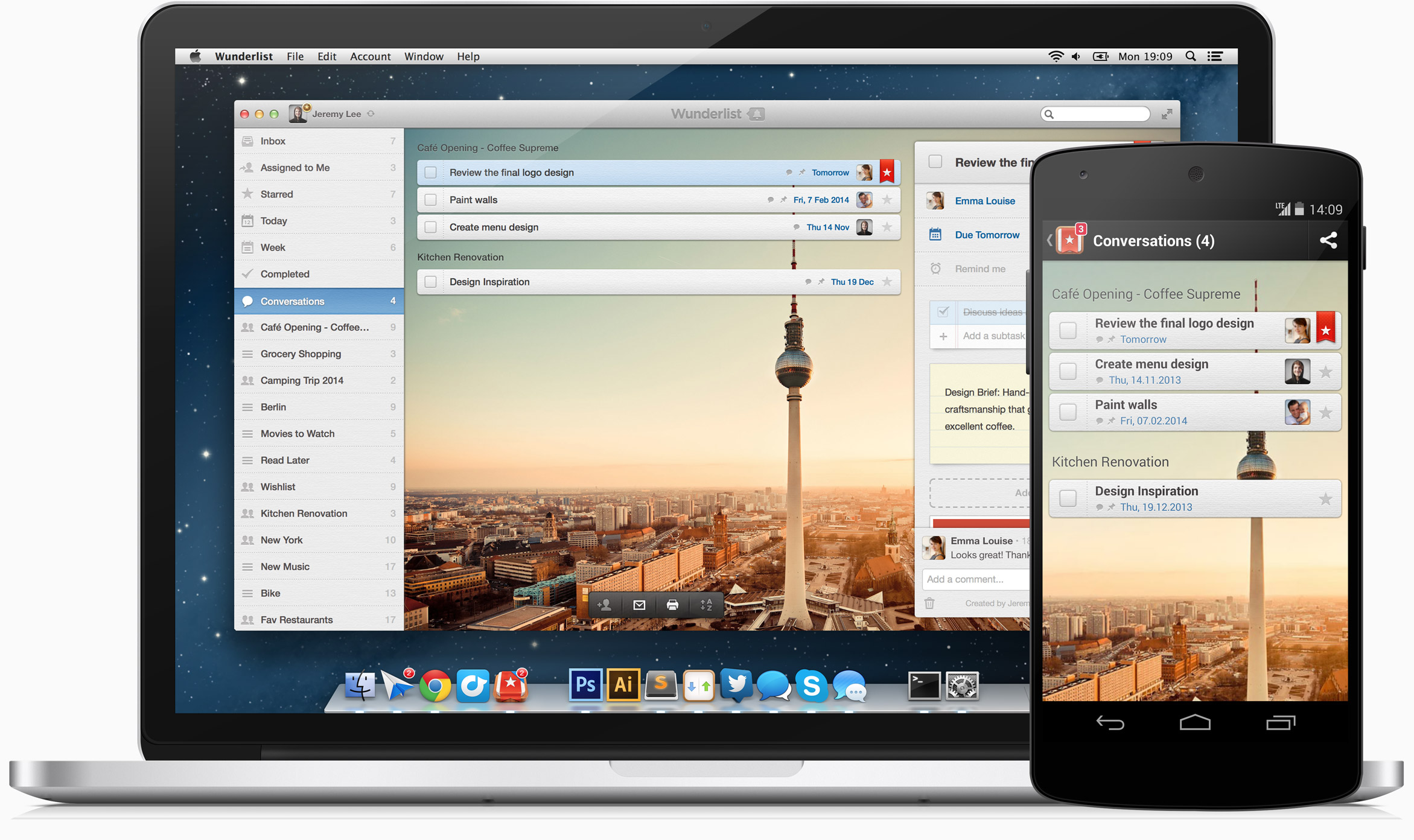
    Wunderlist goal and task management

    Do you believe that your task management process is running efficiently?

    Tasks are those often-reoccurring items that you need to complete on a timely basis before you forget or before they’re irrelevant. Often we not disciplined about scheduling time for these tasks or setting due dates.

    You may also have projects that you’re managing, but task management is not the same as project management. Projects have defined start dates and end dates (even if that end date keeps moving!) and it’s important to stay on top of project milestones and manage schedule risk.

    If you’re managing projects with milestones and resources, then you should be using project management software such as Microsoft Project, Insightly, or Asana. Task management software, on the other hand, is less complex.

    A good task manager will be easy to use.

    The program should also have features such as:

    • Multiple task lists
    • Categorization (or context)
    • Prioritization
    • Calendar & email integration
    • Reminders

    Like most people, I have multiple devices – a desktop PC, a notebook PC, a laptop, and a smartphone. The best way to manage tasks with multiple devices is usually with a cloud-based solution. My task management solution now comes from a company called 6Wunderkinder. I have their Wunderlist application running on all my devices. I can also access my lists through a web browser.

    It’s easy to add a task to your Wunderlist “Inbox”.

    On an iPhone, you can dictate a note to your Wunderlist app. On an Android phone, you can have a Wunderlist widget to quickly add a to-do, or you can dictate a note using Google Now and it will add it to Wunderlist.


    Task Management App

    Here are some benefits that Wunderlist provides:

    • Wunderlist allows me to “star” important items and automatically puts those items in a separate list (called “Starred).
    • It allows me to set due dates and reminders.
    • You can subscribe to your Wunderlist calendar from Apple, Google, or Outlook.
    • When you sign up for a Wunderlist account, you are automatically assigned an email address. You can use this email address to forward emails to your task manager, thereby turning emails into tasks!
    • You can share task lists with anyone. They can view the task list through a browser interface.
    • You can assign tasks to another Wunderlist user.
    • You can access your task lists on any computer through a web browser.

    There are other to-do list apps, including Any.do, Remember The Milk, and Todoist. If you’re so inclined, try them all and see which one works best for YOU!

    Need help with task management?

    Contact Me


  • Here’s an Easy Way to Stay More Task-focused and Productive

    Here’s an Easy Way to Stay More Task-focused and Productive

    Use the Pomorodo method to stay task-focused

    You’ve read my blog post here about productivity: How to Remain Productive, and you’re working on your task list. Now you’ve managed to find some uninterrupted time to get things done.

    Uninterrupted time is a gift and you’re ready to get down to work, but, frustratingly, you may still be feeling restless and having trouble staying task-focused.

    Playing music can help. Try Noisli for background noise that helps you to work more productively.

    Having a place to work that’s cheerful, well-lit with natural light, and comfortable may help. (Personally, I work at a small desk with limited surface space for clutter. It forces me to clean up regularly if I want to make space for a coffee cup!)

    If it’s a matter of staying more task-focused, then you may want to try the Pomodoro method.

    You can research here about the Pomodoro method: Pomodoro Technique. It’s fairly straightforward – work for 25 minutes, then take a 5-minute break. It works because it forces you to stay task-focused for that 25 minutes and the frequent breaks keep you from feeling burnt-out. I suggest using that break to reward yourself – a stretch, maybe a snack?

    Don’t beat yourself up if you can’t go for 25 minutes without interruption as some environments aren’t amenable to it. Do your best to let people know that you need some space and turn off your phone and notifications if you can. If your boss walks in or the baby cries, pause your timer and try again as soon as you can.

    I like to use an app as a Pomodoro timer. Many apps have additional features, but at a basic level they automate the timing and provide notifications. They are also useful for keeping track of how well you do.

    Marinara Timer is a great website with a simple Pomodoro timer. It tracks your session times so that you can see how you did. If you prefer to use your mobile device for a timer, then Pomodoro Keeper for iOS works well; Clockwork Tomato or Simple Pomodoro for Android.

    Get the “Controlling the Chaos” Newsletter and receive a free PDF download
    “Drowning in Email – A Lifeline for Communications Overload”

    * indicates required


  • 3 Simple Paths to a Powerful Follow-up Routine

    Integrate with your calendar for a follow-up routine.

    One of the keys to maintaining and growing a business is a follow-up routine.

    Staying in touch with potential customers, past customers, and referral partners is key. There are many methods to do this, including social media and email marketing. Often, though, a business needs to make that personal contact.

    It’s important to follow-up on a regular basis before you fall off of someone’s radar.

    This means maintaining a follow-up list and a follow-up schedule. A good Customer Relationship Management (CRM) tool can help you to do this. You can read my blog post here about CRM systems: 3 Tools to Easily Follow Up.

    In a typical daily routine, you will start your day by checking your calendar, perhaps scanning your email, and checking your to-do list.

    The most efficient way to have a follow-up routine is to integrate with your regular tasks.

    Here are some ideas of how to do so:

    Integrate with your calendar

    Many CRM systems will integrate follow-up tasks with your Google or iCloud Calendar. Some will also integrate with an Exchange calendar.

    If you’re using Evernote as your CRM, as I write about here: 7 Steps to Manage Client Info, you can use a service called Cronofy to integrate Evernote reminders with your Google, Exchange, or iCloud calendar. The Cronofy service will create a calendar event on the date of the reminder using the title of the note.

    Move your emailed task reminders to a task list.

    I write about that here: How to Integrate Email with Task Management.

    Check your follow-ups tasks before you check your to-do list.

    This usually means logging into your CRM system and checking your dashboard or your reminders if you’re using Evernote. Having the CRM mobile apps installed makes this easy – just open the app and check your tasks/reminders for the day.

    Need help with your sales workflow?

    Contact Me

  • How to Use a Visual Task Management System to Stay On Top of Stuff

    How to Use a Visual Task Management System to Stay On Top of Stuff

    Do you want smooth and efficient task management?

    Tasks are those often-reoccurring items that you need to complete on a timely basis. Poor task management may leave you feeling frustrated because your to-do list keeps growing and it seems like you’re not getting anything done.

    Most task management and productivity tools focus on very linear thinking. But what if you’re a visual thinker?

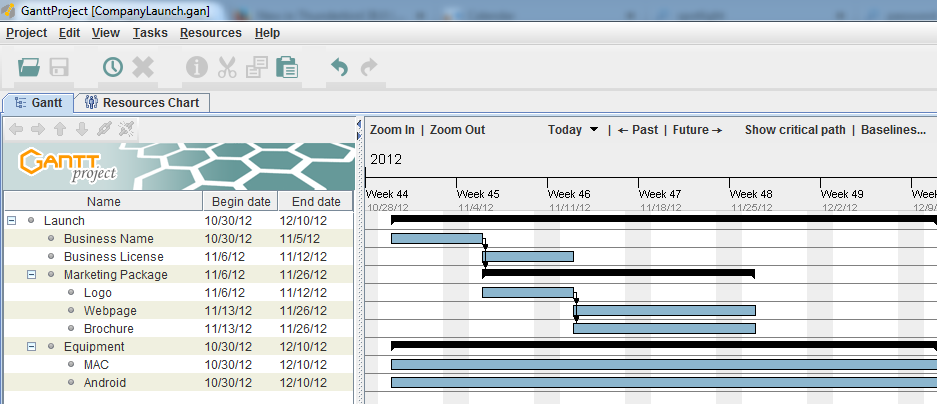
    Visual Task ManagementThe whiteboard is the traditional system for making a visual representation of a project and completed tasks. As we moved into digital tools for project management, the Gantt chart (a type of bar chart) became popular. It was sometimes printed out and displayed to show the project progress. These days, project managers have supplanted the Gantt chart with daily meetings. During these meetings, they move post-it notes, representing the tasks and due dates, around a white board.

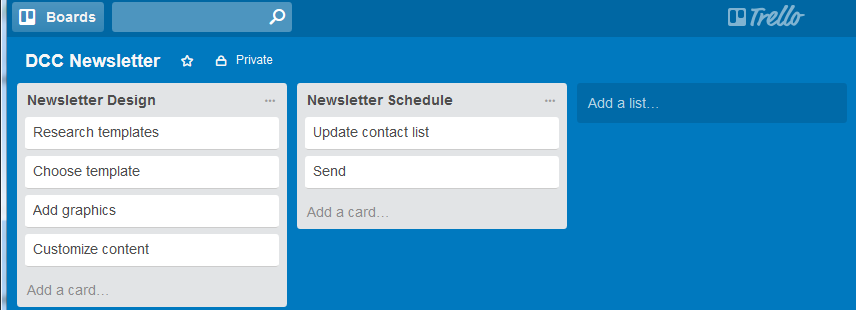
    For individuals and small teams, digital tools are more efficient and practical. Using these tools, you can access your tasks on the go, keep notes and track progress on them, or share them with someone else. One example productivity tool is Trello, which implements something called a “Kaban” board. Trello puts your tasks onto “cards’, and your cards into columns, so that you can arrange your to-dos by lists. An example might be: Column one is “This week”, Column two is “Today”, Column three is “Done”. You can easily move task cards between columns.

    Trello goal and task management

    Trello is a great brainstorming and collaboration tool. For daily task management, here’s a blog post that I wrote about a tool called Wunderlist: Task Management for the Super Efficient. Here’s an interesting perspective on using both Trello and Wunderlist together: Trello and Wunderlist.

    Get the “Controlling the Chaos” Newsletter and receive a free PDF download
    “Drowning in Email – A Lifeline for Communications Overload”

    * indicates required


  • How To Easily Follow-up on Those Important Emails in Outlook

    How To Easily Follow-up on Those Important Emails in Outlook

    Outlook Follow-up To-do

    If you’ve gone through the process of email organization (see my blog post here: 4 Steps to Becoming More Responsive), then you hopefully have a streamlined inbox with just the most important emails.

    You also should have a daily routine of dealing with those emails that consists of:

    1. Evaluating
    2. Acting On, filing, or flagging for follow-up

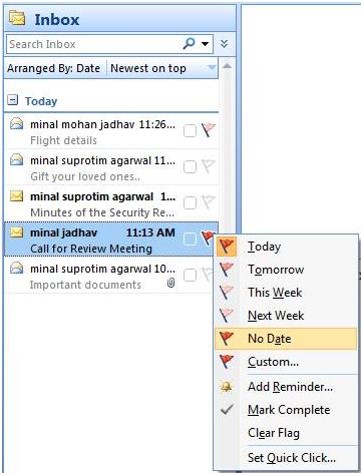
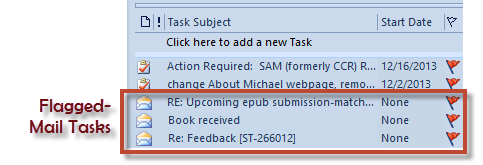
    Flagging an email in Outlook creates a follow-up to-do item.

    Your email is not only marked with a flag in your Inbox, it’s also listed in your Tasks view under “To-Do List”, in the To-do sidebar, and in the Daily Task List in your calendar.

    (Outlook treats your email to-do a little differently than a task that you’ve created. You can’t assign it to someone else, for example, or track its progress. If you delete the email, then you delete the to-do.)

    Outlook Follow-up to-doIf your email account is a POP account, open the email and select a flag for Today, Tomorrow, Next Week, etc.  If your email account is an IMAP account, you have only the option of a flag with no follow-up date.

    You can then sort your email inbox by selecting “Arrange By: Flag” under the View menu.

    You can also look at these flagged emails in Tasks under “To-Do List”. (Outlook lists IMAP emails under Due Date: No Date.)

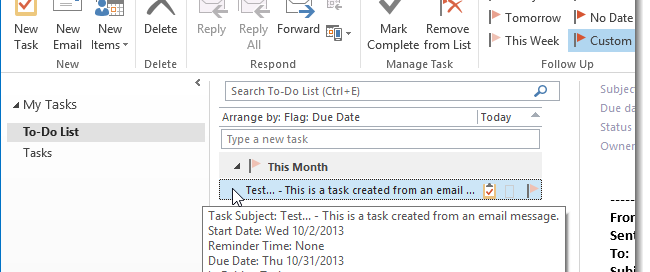
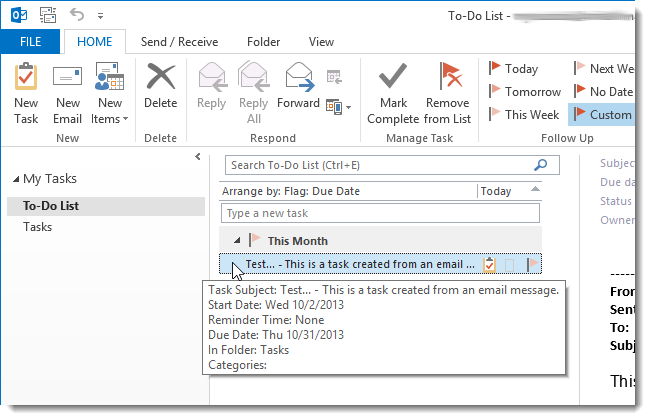
    If you want to create an actual Outlook task, rather than an email to-do, then you can drag the email to Tasks on the navigation bar. Outlook saves the email content to the body of the new task. You can now delete the original email if you wish. Since you will be able to assign a due date for the task, this is the recommended method for any IMAP account.

    Here’s a detailed blog post outlining this method: How to Create a Task from an Email Message.

    SUBSCRIBE TO MY NEWSLETTER

    Get the “Controlling the Chaos” Newsletter and receive a free PDF download
    “Drowning in Email – A Lifeline for Communications Overload”

    * indicates required


  • Don’t Take My Post-it Notes Away

    Don’t Take My Post-it Notes Away

    Post-it Plus

    Are you someone who still uses post-it notes for to-dos?

    You’re not alone. For a visual person, it can be helpful to glance at those colorful notes to see what’s next in the queue. If you’ve read my post on task management here: How to Stay on Target with Your Goals, then you know that there are some visual task management systems. There are also project management systems that have returned to using post-it notes.

    One of the problems with post-it notes is that your system can get messy.

    If you’re very organized, then you have them on your white board in neat columns , but if you’re not, then they may be stuck all over the place. Also, you have to be in the room to see them.

    If you don’t want to let go of your post-it habit, then there’s an iOS app for you, created by 3M, the maker of post-it notes. You can keep your notes and still go digital to organize them and bring them with you.

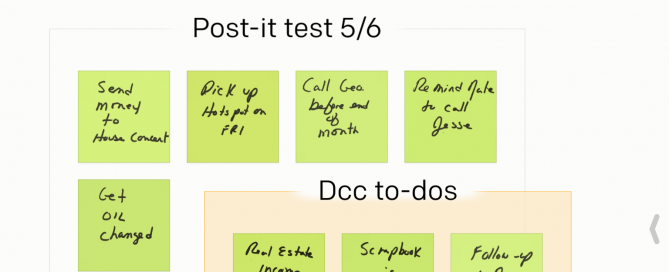
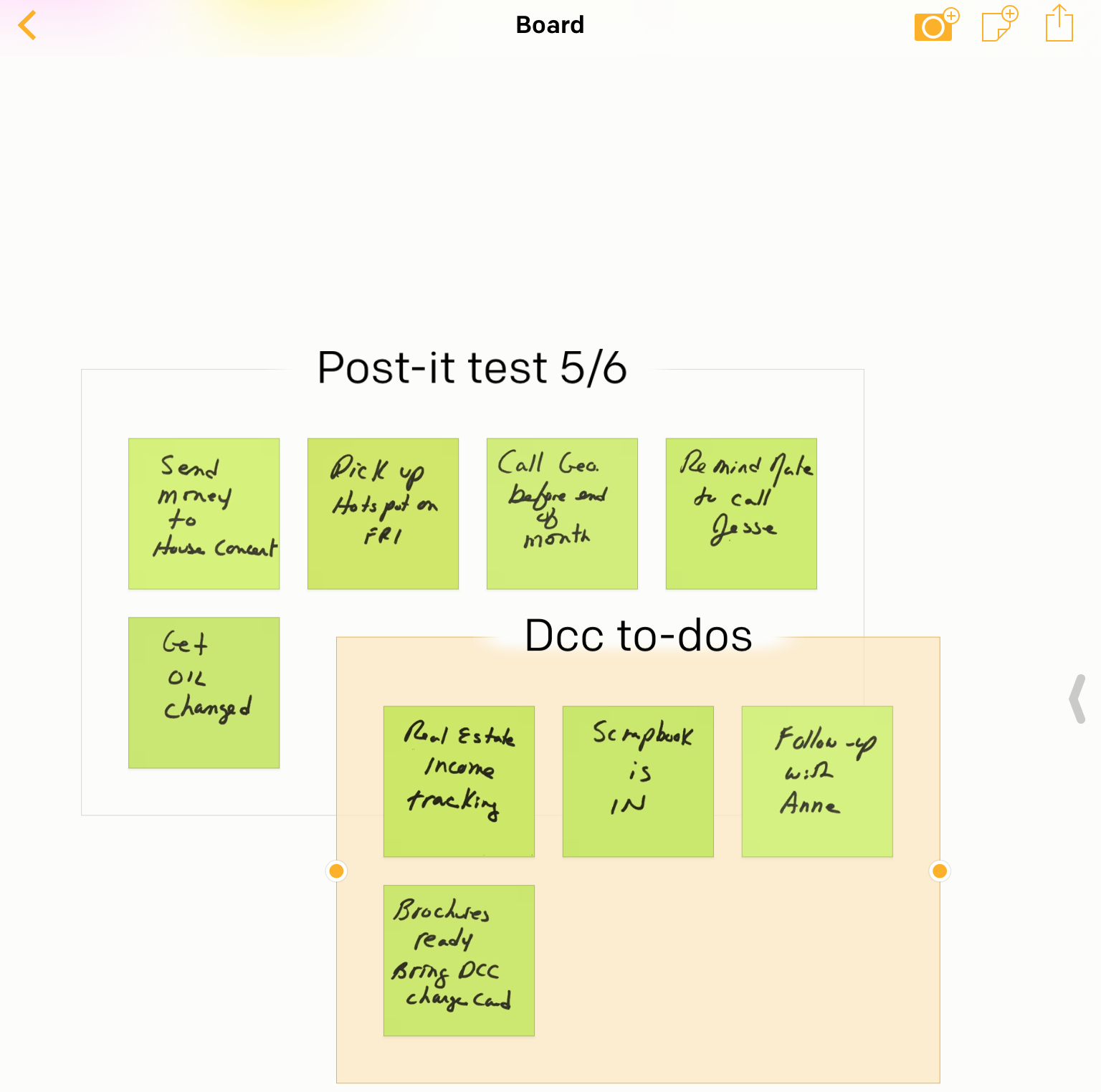
    The app is called “Post-it Plus App”. First, take a picture of your notes. The app will recognize individual notes, allow you to move them around, and also create new notes.

    In my screenshot example above, I started with my notes posted on a wall but not organized in any way. After I took the picture, I moved a note in the app to create a new “board”, and then organized other notes onto that board.

    Now I can see at a glance my personal to-dos board, and my work to-dos board.

    If you don’t work on an iOS device, or if you’d like a more efficient way to work with post-it notes, then consider using Evernote. Here’s a nice post about the Evernote post-it system: Evernote Post-it Notes. More information about Evernote here: Use Evernote For a New Level of Organization.

    Get the “Controlling the Chaos” Newsletter and receive a free PDF download
    “Drowning in Email – A Lifeline for Communications Overload”

    * indicates required


  • 3 Reasons to Stop Using Email as a To-do List

    3 Reasons to Stop Using Email as a To-do List

    Flagged Email Tasks

    Staying on top of email chaos is not easy.

    Even after you’ve followed the steps to manage your email inbox (see my blog post here: 4 Steps to Becoming More Responsive), you still need to deal with those emails that need a follow-up task. How do you make sure that you get those done, and that they don’t get lost in the daily shuffle?

    There may be event invitations that you leave in your Inbox to remember the date. There may be questions from clients whose emails you need to follow up on later. There may be business partners sending information that you’d like to read when you have time.

    The easiest way is to have a daily routine to review and act on those emails. If you flag the most important emails, you can review them daily. You can then delete them or archive them as you finish your follow-ups.

    But it’s easy to get behind with those email tasks.

    You may find yourself with a list of flagged emails that just keeps growing. They’re all important, but how do you find the time to get through them? Are they all equally important?

    Here are three good reasons to not leave those emails as to-dos in your Inbox:

    1. You may have to read the emails to see what they are. In a to-do list, you have clear task titles. You may even want to use the “action title” method that I mention in this blog post: I never finish anythin….
    2. It’s not easy to prioritize your email tasks. You can try using different color flags or stars, but then you have to take context into consideration. Are you mixing your personal and work emails? What about emails from clients mixed up with emails from vendors?
    3. While you’re working on your sorted, prioritized Inbox, you have emails coming in. You won’t see them until you change your sort order back to dated order.

    Have another look at my blog post here: How to Integrate Email with Task Management and think about installing a task manager instead.

    Get the “Controlling the Chaos” Newsletter and receive a free PDF download
    “Drowning in Email – A Lifeline for Communications Overload”

    * indicates required


  • How to Stay on Target with Your Goals

    How to Stay on Target with Your Goals

    Task Manager for Your Goals

    What is productivity?

    Productivity means performing on target according to your goals and deadlines. Let’s say your goal is to create a social media presence and have twenty followers. You’ll need to set a deadline to achieve that goal, break it down into achievable tasks, and assign a due date for each task.

    If you’re working unproductively, you won’t meet your goals by the deadline. This results in missed opportunities, loss of income, and perhaps a drop in confidence.

    There are many reasons for missing your deadlines, including unexpected obstacles, distractions, and unproductive employees. But you can mitigate the risk by making sure that you have good productivity tools in place.

    Start by setting up your system.

    You need:

    • Task management or project management software
    • Documented goals and deadlines
    • Activity sets for each goal
    • Due dates for each task with reminders

     
    Wunderlist goals and tasks manager


    Here’s my blog post on my preferred task manager called Wunderlist: Task Management for the Super Efficient. For project management, I like Insightly for ease of use, others prefer Asana or Basecamp.

    The next step after setting up your system is to determine your best method for working productively on a single task.

    This includes considering your work layout and your most productive time of day. Also consider limiting distractions during your work time by turning off notifications. Start by reading my blog post here about “perceived” productivity: How to Remain Productive.

    One productivity method is “Getting Things Done”. I’ve mentioned this in previous blog posts. Here’s a post about this and other methods for productivity: The Busy Human’s Guide to the Best Productivity Systems.

    As you’re working toward your goals, you will not only have to deal with distractions, you will also have to deal with shifting priorities.

    Let’s say, for example, that after reaching 10 followers on social media, all 10 are requesting a consultation or more information. These are new tasks that you have to integrate into your system.

    Do the following at least weekly:

    • Review your deadlines
    • Analyze your productivity and the factors affecting it
    • make adjustments


    Gantt Chart for Goals
     
    The white board is the traditional system for making a visual representation of a project. As we moved into digital tools for project management, the Gantt chart (a type of bar chart) became popular. It was sometimes printed out and displayed to show the project progress.

    These days, these methods have been replaced with methods that recognize the shifting priorities of projects.

    Teams have daily meetings run by project managers. They move post-it notes around that represent tasks.

    Trello goals and tasks management

    There are now project management tools that use a more visual method. One example is Trello. Trello implements something called a “Kaban” board. It puts your task cards into columns so that you can arrange your tasks by lists.

    An example might be: Column one: “This week”, Column two: “Today”, Column three: “Done”. You can easily move task cards between columns.

    Whatever your working style is, once you’ve got the right systems and the right tools in place, you’ll be able to reach your goals consistently.

    Get the “Controlling the Chaos” Newsletter and receive a free PDF download
    “Drowning in Email – A Lifeline for Communications Overload”

    * indicates required


  • How to Remain Productive

    How to Remain Productive

    Staying productive

    If you’re using the GTD (“Getting Things Done”) method to stay productive, as outlined in my Evernote blog here: How to Implement “GTD” in Evernote (or even if you’re not, but you do have task lists), you may find yourself with an ever-growing “Next Actions” list, and/or “Someday/Maybe” list. Having a to-do list that just keeps growing can feel discouraging and can affect your “perceived” productivity.

    There are many factors that can keep you from being productive.

    • Life happens – you have personal challenges going on
    • You take on new projects
    • Your day is not well structured
    • You have too many interruptions
    • You’re losing motivation

    If you’re losing motivation, then, by all means, take a break.

    “There’s strong evidence that disengagement, breaking away, can help recharge people cognitively,” says University of Toronto sociology professor Scott Schieman. Schieman is studying the relationship between work, health and stress among Canadians. “This is anecdotal, but if I’ve gone on vacation and I come back, the ideas flow and things really move along. By contrast, if I’m sitting at my desk trying to squeeze out the last bit of idea, it just doesn’t work.”

    If you have too many interruptions, then you need to find some uninterrupted time to work, preferably every day.

    Build the time into your schedule and work somewhere away from distractions if you can, which usually means away from the office. Jason Fried, a co-founder of Basecamp, said during a 2010 TED talk about the workplace: “You walk into the front door and it’s like a Cuisinart. Your day is just shredded to bits.” Jason calls the most frequent sources of interruptions in the workplace “M&Ms” – Managers and Meetings.

    Even working away from the office, you should take breaks. Use them to scan email, do some web surfing, stretch, and/or exercise.

    If you feel like you’re doing all that you can to keep up and your to-do list is still growing, then you should be taking more drastic measures. Your perceived productivity affects your morale can be affected by your perceived productivity, so cut that list down by delegating or deleting.

    Get the “Controlling the Chaos” Newsletter and receive a free PDF download
    “Drowning in Email – A Lifeline for Communications Overload”

    * indicates required