Category: Storage Management

  • 4 Ways to Add More Computer Storage Space

    4 Ways to Add More Computer Storage Space

    HDD SDD Storage

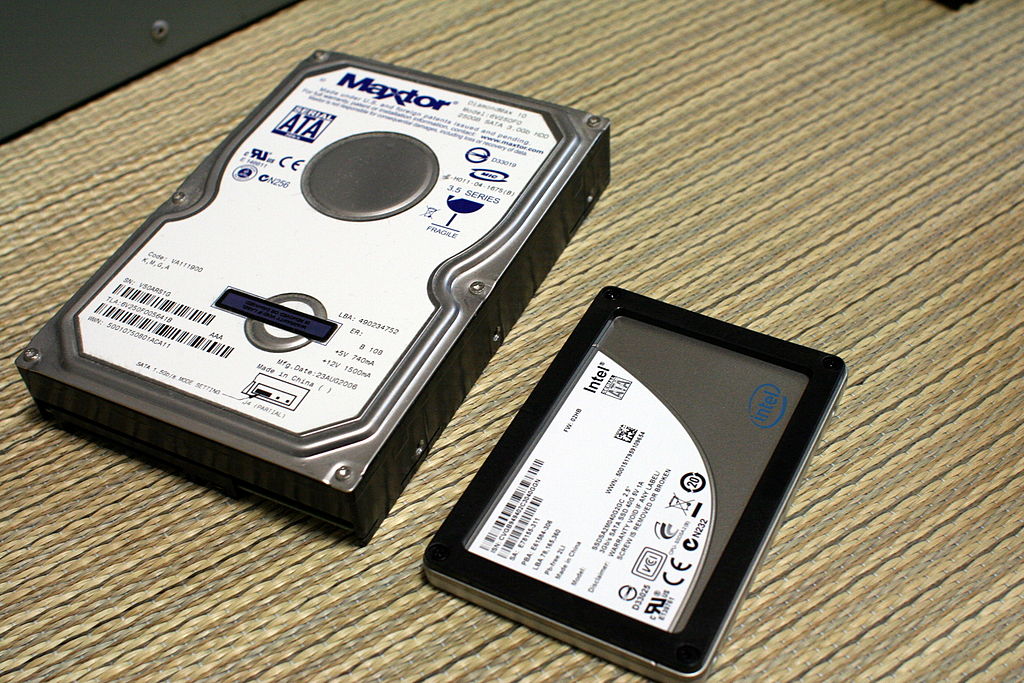
    One way that laptops are getting thinner and lighter is by replacing the hard disk drive with a solid-state drive (SSD). An SSD has no mechanical moving parts so it’s faster, lighter, and more robust. Sounds ideal for a portable device, right?

    Yes and no. SSDs are ideal functionally but they cost more per byte than hard drives. To keep the overall cost of the laptop down, you get less storage space. (Here’s a detailed article on SSDs and HDDs: How Much Storage Capacity Do I Need?)

    If you’re like me, you use a desktop computer for daily work and a laptop for working on the go. So then it’s not an issue. Your photos and videos are stored on your desktop computer. (And hopefully backed up – see my blog post on backups here: How to Backup Multiple Computers.)

    But if your laptop is your main computer and your storage space is limited, then you may need to manage that space.

    Don’t wait until you get the message that you’ve run out of space, make a plan now for more storage before you need it.

    Start by reading my blog post here: 6 Tips for Managing Your Computer Storage.

    Now that you know how to keep an eye on your storage space, here are some options for adding more.

    1. You can get a new laptop. A MacBook Air tops out currently at 256GB. You would have to upgrade to a MacBook or a MacBook Pro which goes up to 512GB. High-end PC laptops go up to 2TB.
    2. You can replace your SSD with a larger one. If your laptop is still under warranty, you will want to do this through the original manufacturer. If it’s out of warranty, then a local computer shop may be able to do this for you, depending on the laptop model. You’ll want them to duplicate your existing drive data to the new one first.
    3. You can add an external hard drive. A good way to split your data is to archive your old photos and videos to an external hard drive. (You’ll actually want 2 external drives – one that you can keep handy to access those photos, and one that’s another copy for a backup.)
    4. You can use a removable storage device if your laptop has an SD slot. This option would be more portable than an external hard drive. (Again, you should make another copy of your files on an external hard drive or USB drive.)

    As the price of SSDs come down, we’ll see the default storage for these laptops go up. But for the time being, we’re trading that space for portability and lower cost.

    Portability is a good thing, but make sure that you’re staying on top your of your storage needs.

    Get the “Controlling the Chaos” Newsletter and receive a free PDF download
    “Drowning in Email – A Lifeline for Communications Overload”

    * indicates required


  • 3 Ways to Keep Your Digital Life Organized

    3 Ways to Keep Your Digital Life Organized

    Organized Digital LifeHave you ever found yourself wasting time and getting frustrated because you can’t find something on your computer?

    And what if you don’t have your computer with you? Can you pull up that photo on your mobile device that you’d like to show off?

    Wouldn’t it be nice if you were so efficient and organized that you don’t even have to think about how to find something?

    You may not be able to get to the level of efficiency that you’re working like an automaton, but there’s probably lots of room for improvement. If you’re someone who has file icons littering your desktop or hundreds of photos still on your smartphone and not organized in any way, then read on!

    Start with defining your organized system.

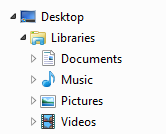
    Organized Digital FilesYour operating system creates some high-level organization for you – a Documents library, a Photos library, a Videos library, and a Music library. When you save a document, import photos, or purchase music, these folders are initially used by default by your applications. (However, your applications will usually change the default to the last folder used, so if you’ve saved something to your desktop, you may be saving everything after that to the desktop without realizing it.) Use these default folders as a start for your organization system.

    You have three options when organizing your documents:

    1. Create file folders by function. For example, you may have a file folder for Personal, with sub-folders for Finance, Kids, etc. You may then have another top-level folder for Business, with sub-folders for Clients, Marketing, Taxes, etc.
    1. Create file folders by type – for example, a folder called Marketing, with sub-folders for Presentations, Brochures, etc.
    1. Use a tool that organizes by function, but that combines documents, media, emails, etc. Evernote is a good example of this and you can read about it here: User Evernote For a New Level of Organization.

    Some software programs that work with media (music, photos, and videos) may use libraries (see my blog post here about libraries: What Everyone Ought to Know About Digital Music and Photos) that contain information about the media (such as keywords, album, genre, etc.) as well as the media file itself. It’s best to work within those programs to organize the media. For example, if you use the Photos program on the Macintosh, you can create folders and albums for your photos. You can also assign keywords to help you search for those photos later.

    Once you have a good organization in place, make sure that you use that system whenever you download or save a new document and whenever you add new media. If you use a cloud service like Dropbox or iCloud Drive, then you’ll also be able to pull up whatever you need on your mobile device as well – just create your organization system in the Dropbox folder or iCloud Drive folder. (You can find your Dropbox folder listed under “Favorites” in a Windows Explorer window, and your Dropbox or iCloud Drive folder under “Favorites” in a Macintosh Finder window.)

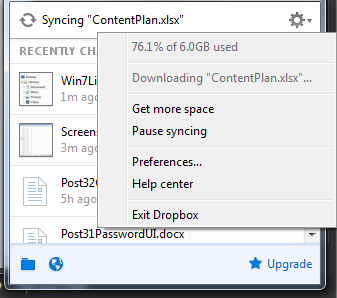
    Organized Files in DropboxHere’s how to check that you have enough storage space in your cloud service:

    • Windows: Click on the Dropbox icon in the far right of your taskbar and then click on the arrow to the right of the gear icon.
    • Macintosh:
      • Dropbox – click on the Dropbox icon in the menu bar at the top and then click on the arrow to the right of the gear icon.
      • iCloud Drive – you can check your iCloud storage space by going to System Preferences and iCloud, then view your available storage at the bottom.

    Remember that your cloud storage ALSO takes up the same amount of space on your computer because it’s a cloud synchronization service, not a backup service. Also remember that deleting a file on one device will delete it from the cloud and from all of your other devices. (iCloud Photo Library works the same way.)

    You should also be keeping an eye on your storage space. You can read my blog post here: 6 Tips for Managing Your Computer Storage.

    Get the “Controlling the Chaos” Newsletter and receive a free PDF download
    “Drowning in Email – A Lifeline for Communications Overload”

    * indicates required


  • 6 Tips for Managing Your Computer Storage

    6 Tips for Managing Your Computer Storage

    We may think that our computers come with massive amount of storage space.

    If you do have a very recent desktop computer, then it may be a very long time before you have to start paying attention to your storage space, but if you have an older desktop computer or if you have a laptop computer, particularly something ultra-portable like a Macintosh Air, then it is time to take a look.

    As your storage space fills up, it can slow your computer down as well as put you at risk of running out of storage space just when you need to save that important document. Although there are no hard and fast rules and computer speed is dependent on many other factors, I generally recommend to my clients to start looking at storage space management once the hard drive is more than 60% full.

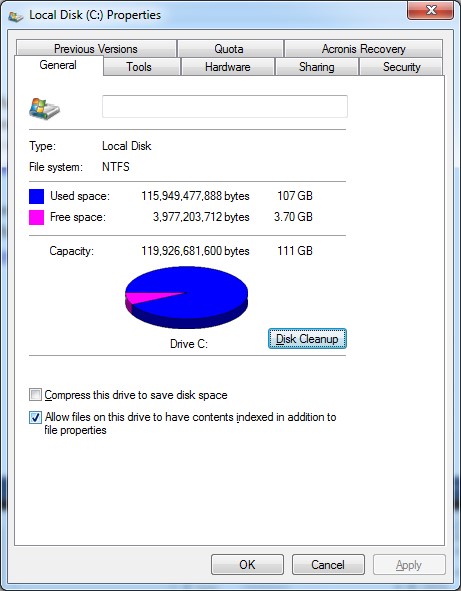
    To check your available space from Windows File Explorer, right click on the C: drive and select “Properties”.
     
    Windows Storage Space


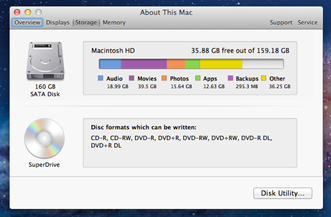
    In MacOS, select “About this Mac”, and then “Storage.
     
    Macintosh Storage Space


    Here are 6 ways to manage your storage space:

    1. Clean out your Downloads Folder.
    2. Delete unused apps: Use “Uninstall a Program” from Windows Control Panel. On a Mac, drag from your Applications folder to the trash can.
    3. Clean out iTunes: You can move music albums and movies that you haven’t enjoyed in quite some time to an external drive or delete them.
    4. Empty your trash: Right-click (Or control-click on the Mac) on the Recycle Bin or trash can icon and select “Empty”. (If you use iPhoto on the Mac, it has its own trash can that needs to be emptied from within the program.)
    5. Run Cleanup: On a PC, you may have noticed the “Disk Cleanup” button in your disk drive Properties window. This is a tool to help to remove downloads, temporary files, and your trash.
    6. Move photos to external storage: Photos and videos take up the most space on our computers. Split your photo library so that this year’s photos can stay on your internal drive and then move your older photos to an external drive.

    Be sure to make a copy of your media archive on flash drives or DVDs as well because external hard drives can fail. You could also use a cloud storage service for your archive backup.

    Did you find this post useful? The way that we work with information is changing and you can help spread the word by sharing with your social media.

    Get the “Controlling the Chaos” Newsletter and receive a free PDF download
    “Drowning in Email – A Lifeline for Communications Overload”
    * indicates required